Fruit Facts

Get to know what you're picking.

The stories, origins, and best uses behind our varieties — new entries added as different fruits come into season.

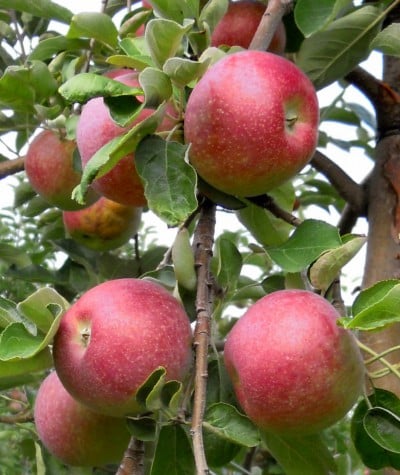
Ripe Paula Red apples on the tree at Michaud Orchard

Apples

Paula Red

Ripens mid-to-late August into October

Origin
Paula Red (sometimes spelled Paulared) is an early-season apple variety discovered as a chance seedling in 1960 by grower Lewis Arends near a McIntosh block in his orchard in Sparta Township, Kent County, Michigan. He named it after his wife, Pauline. It's a natural cross of McIntosh and Duchess of Oldenburg.
Appearance
Medium to large apples, typically bright red over a yellow background with some tan or greenish spots and often a dusty or waxy sheen.
Flavor
Firm white flesh with a sprightly, balanced sweet-tart flavor — vinous, and sometimes described as having mild strawberry notes — that sits between McIntosh and milder early varieties.
Best Uses
Excellent for fresh eating when crisp. They break down readily when cooked, making them outstanding for applesauce (often needing little or no added sugar) and sauces or butters.
Apples

Gala

Ripens early-to-mid September

Origin
Bred in New Zealand in the 1930s by orchardist J.H. Kidd, a cross of Kidd's Orange Red and Golden Delicious. It reached American orchards in the 1970s and quickly became one of the most widely planted apples in the world.
Appearance
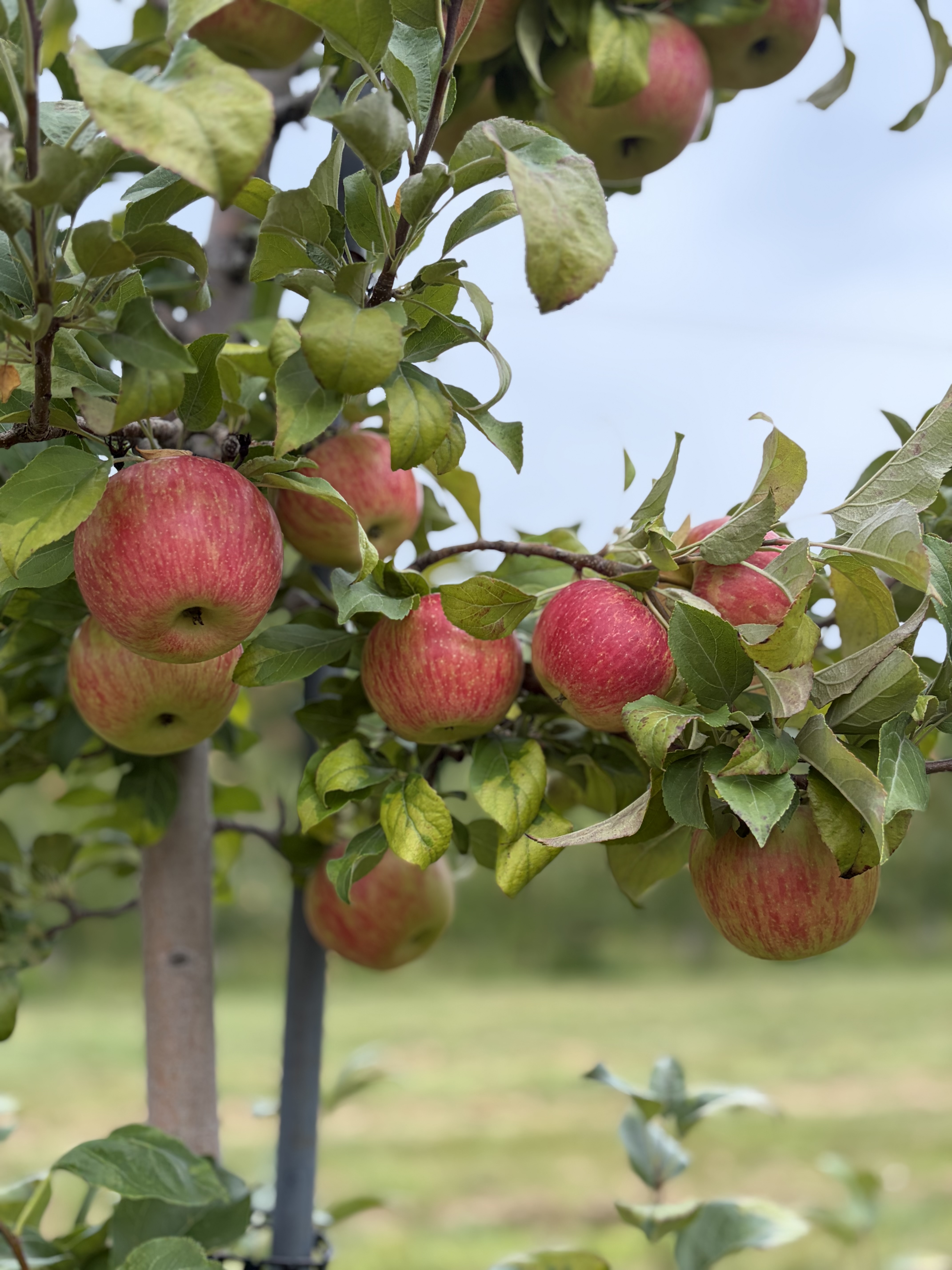
Medium-sized and round, with a yellow-orange background overlaid by red-orange stripes.
Flavor
Crisp and juicy with a mild sweetness, low acidity, and a light floral aroma — one of the gentlest, kid-friendliest flavors of the season.
Best Uses
A top choice for fresh eating and lunchboxes. Milder than a baking apple, so it's best enjoyed raw or in a light applesauce rather than pie.
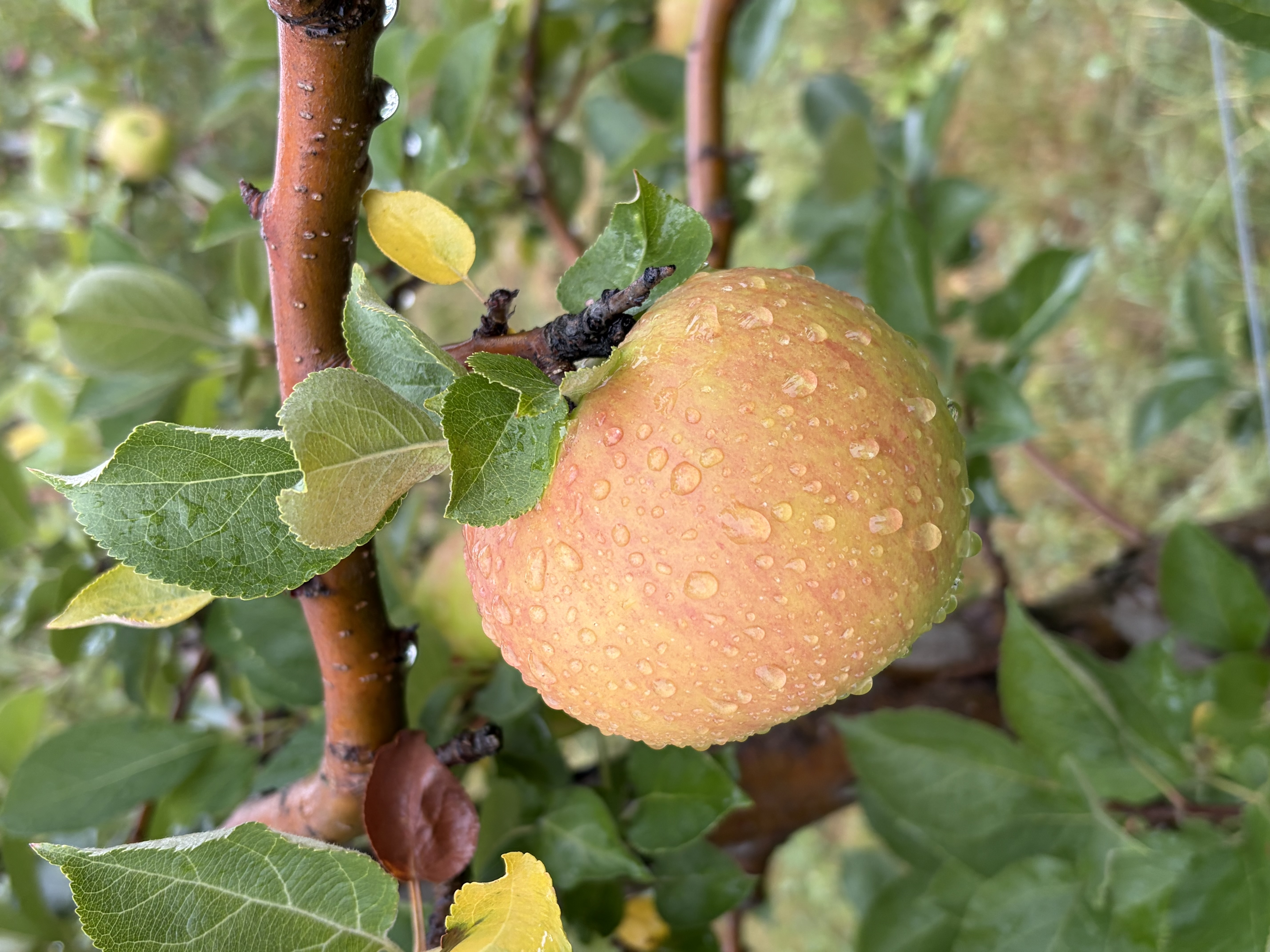
Ripe Honeycrisp apple on the tree at Michaud Orchard

Apples

Honeycrisp

Ripens early-to-mid September

Origin
Bred by the University of Minnesota's apple breeding program (crossed in the 1960s, released in 1991). For years it was believed to be a cross of Macoun and Honeygold, but DNA testing in 2017 revealed its real parents are the Keepsake variety and an unreleased, unnamed University of Minnesota seedling.
Appearance
Large, round apples with a mottled red-orange blush over a yellow background.
Flavor
Famous for its texture — explosively crisp and juicy — with a well-balanced sweet-tart flavor.
Best Uses
Best enjoyed fresh, where that signature crunch shines. Its firm flesh holds its shape well in salads and baking, though it doesn't break down easily enough to be a good sauce apple.

Apples

Macoun

Ripens late September – October

Origin
Developed at the New York State Agricultural Experiment Station in Geneva, NY, and introduced in 1923 — a cross of McIntosh and Jersey Black. It's named after Canadian horticulturist W.T. Macoun.
Appearance
Deep purple-red skin, often with a light bloom, over a green background; snow-white flesh underneath.
Flavor
Aromatic and spicy-sweet with just enough tartness to keep it interesting — widely considered one of the best-flavored eating apples grown in the Northeast.
Best Uses
A fresh-eating favorite. It bruises easily and doesn't keep long, so it's best enjoyed soon after picking rather than stored.

Apples

McIntosh

Ripens mid-September – October

Origin
Discovered in 1811 by John McIntosh as a chance seedling on his farm in Dundela, Ontario, Canada. It's one of the most influential apples in North American history — the parent (or grandparent) of many varieties grown today, including Cortland and Paula Red.
Appearance
Round apples in deep red with patches of green, with tender white flesh underneath.
Flavor
Juicy and aromatic, with a tangy, slightly tart, almost winey flavor.
Best Uses
Excellent for fresh eating, and it breaks down readily when cooked, making it a classic choice for applesauce. Its slices soften quickly in the oven, so it's often blended with a firmer apple for pie.

Apples

Cortland

Ripens mid-September – October

Origin
Bred at the New York State Agricultural Experiment Station in Geneva, NY (crossed in 1898, introduced in 1915), a cross of McIntosh and Ben Davis.
Appearance
Large, round apples in deep red over a greenish-white background.
Flavor
Tender and juicy with a mild tartness — a softer, milder cousin of its McIntosh parent.
Best Uses
Its flesh is unusually slow to brown once cut, making it a favorite for salads and fruit platters. Also a reliable all-purpose apple for fresh eating and baking.
Ripe Cox's Orange Pippin apple on the tree at Michaud Orchard

Apples

Cox's Orange Pippin

Ripens late September – October

Origin
Raised around 1830 by Richard Cox, a retired brewer, in Colnbrook, England, believed to be a seedling of the Ribston Pippin. It's a classic English heirloom, prized by apple connoisseurs for nearly two centuries.
Appearance
Medium-sized and thin-skinned, with an orange-red flush over a yellow-green background, sometimes lightly russeted.
Flavor
Complex and aromatic, often described with notes of pear, honey, and warm spice — widely regarded as one of the finest-flavored dessert apples grown.
Best Uses
Best for fresh eating, where its flavor gets to shine, and a favorite in cider blends. It's more delicate than modern commercial varieties and doesn't store or ship as well.

Apples

Fuji

Ripens mid-October – November

Origin
Developed in the late 1930s at a research station in Fujisaki, Aomori Prefecture, Japan — a cross of Red Delicious and the old Virginia variety Ralls Janet. It was released commercially in 1962 and named after the town where it was bred.
Appearance
Large, round apples mostly covered in a pink-red blush and striping over a pale yellow-green background.
Flavor
Very sweet, dense, and exceptionally juicy, with low acidity.
Best Uses
A great keeper — one of the longest-storing apples — so it's ideal for fresh eating and snacking well past picking season. Its sweetness also holds up nicely in baking.